Call: (810) 674-3060


Porcelain vs. Composite Veneers: A Clinical Comparison of Durability, Light-Reflection, and Stain Resistance
Veneers are becoming an attractive alternative for many seeking the perfect smile. Whether you find yourself struggling with chipped, discolored, or misaligned teeth, there’s no doubt that veneers can help you achieve the smile you want.
People often try to determine which type of veneer is right for them: porcelain or composite. Even though both materials are excellent alternatives, understanding their differences in durability, light reflection, and stain resistance can help you make a more well-rounded decision. If you are considering veneers in Burton, MI, this clinical comparison will help you determine which type best suits your needs.
What Are Veneers?
Dental veneers refer to thin layers placed on the front of your teeth for aesthetic purposes. They can be used to reshape, resize, recolor, or even align your teeth. There are two primary types: porcelain veneers and composite veneers. All these materials have their advantages, but it is essential to understand their distinctions to make informed decisions.
Porcelain vs Composite Veneers: Which Has a Longer Lifespan?
One of the key factors to consider when deciding between porcelain and composite material for veneers in Burton, MI, is durability. This is because you want your investment in your smile to last as long as possible.
Porcelain Veneers
Porcelain veneers have long-lasting properties. Owing to their strength and durability, they last 10 to 15 years. Another very important feature is their high resistance to wear and tear. This makes them a perfect choice for a smile makeover for someone seeking a long-lasting result.
Moreover, porcelain is quite hard; therefore, it has a high resistance to chipping, fracturing, and breakage. Thus, if one grinds his or her teeth or has a strong bite, then porcelain is the best material for them. Moreover, if one maintains them properly, porcelain veneers will always look beautiful for many years; hence, this is one reason many opt for porcelain veneers.
Composite Veneers
Composite veneers are quite durable. However, they are not quite as long-lasting as porcelain veneers. Usually, they last 5-7 years. This is based on your personal oral hygiene practices. Also, they are generally made of a resin that is cemented onto your teeth.
However, composite veneers can also be easily repaired if they become damaged. If you have noticed chipping or cracking, you can consult a cosmetic dentist to help smooth or fill your composite veneers.
Light Reflection: Which Material Looks More Natural?
The material’s light-reflection properties can significantly affect how closely a veneer resembles nature. The goal of a veneer, therefore, is to produce the light reflection of a natural enamel surface.
Porcelain Veneers
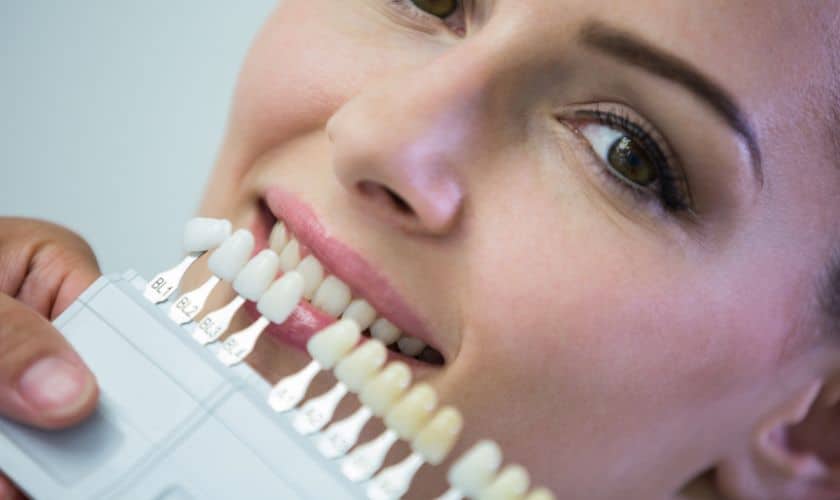
Porcelain is highly valued for its natural translucency. The material can transmit light in a manner almost like that of natural tooth enamel. This makes porcelain veneers highly preferred for patients seeking the most natural smile makeover solution.
Light reflection from porcelain veneers ensures a perfect match with your teeth, rendering them invisible while blending seamlessly. It is because of such qualities that porcelain veneers are known as the most sought-after solution for those who are in search of the most natural-looking smile.
Composite Veneers
A composite veneer does not reflect light as well as a porcelain veneer. They can also reflect the color you want for your teeth, but they are likely to have less translucency compared to porcelain veneers. Over time, you are likely to view composite veneers as less vibrant than porcelain veneers due to their absorption and wear. However, improvements have been made to composite resin. Although they cannot reproduce the translucency of porcelain, they can nevertheless give excellent results, especially if the patient seeks a less expensive option.
Stain Resistance: Which Material Performs Better?
Stain resistance is a factor you will want to consider when deciding between porcelain and composite veneers. After all, you want your veneers to remain bright and white for as long as possible.
Porcelain Veneers
These veneers are popular for their effective stain resistance. Porcelain veneers do not allow stains to penetrate, as they are non-porous. This means whether you are having your favorite cup of coffee in a café in Burton or a glass of wine, your veneers will always retain their bright color.
Porcelain is also easy to clean because of its smooth surface, which will not accumulate plaque and stain easily. Therefore, this is an excellent option for a person looking for a low-maintenance solution.
Composite Veneers
Composite veneers are stain-resistant; however, they are more susceptible to discoloration compared to porcelain veneers. The resin is more porous than porcelain veneers; hence, it tends to absorb stains from daily food intake. Additionally, they may stain if you smoke.
However, the composite veneer is easier to touch up. If staining occurs, your cosmetic dentist can buff and polish the veneer to restore its appearance. This makes it a good choice for people who don’t mind the occasional touch-up.
Porcelain vs Composite Veneers: Which is Best for You?
Whether you opt for porcelain or composite veneers depends on your personal requirements. If you are searching for the most long-lasting, natural, and stain-resistant smile, then porcelain veneers are your best bet. With these, you can enjoy a radiant smile for over a decade if you give them proper care.
However, if your budget is not as large or you prefer something that can be easily repaired, composite veneers can be a good option. Although they do not last as long as porcelain veneers, they can still be a great option to enhance your smile.
Ready to Transform Your Smile?
If you would like to improve your smile with veneers in the Burton, MI area, please do not hesitate to contact us at Burton Family Dental. We are committed to helping you find the best solution to your cosmetic dental needs.
Be it porcelain veneers or composite veneers, our team will be with you every step of the way to help you get the beautiful smile that lasts. Call us to schedule your appointment today and begin the journey towards a confident self.
FAQs
1. How long do porcelain veneers last?
Porcelain veneers can last 10-15 years with proper care, making them a long-term solution for a beautiful smile.
2. Are composite veneers easier to repair than porcelain?
Yes, composite veneers are easier to repair. If they chip or crack, your dentist can often fix them quickly without replacing the entire veneer.
3. Can I drink coffee with porcelain veneers?
Yes, you can drink coffee with porcelain veneers. They are highly resistant to stains and will not discolor from coffee or other common staining foods.
4. How do I care for my veneers in Burton, MI?
To keep your veneers looking great, brush and floss regularly, avoid chewing on hard objects, and visit your dentist for routine check-ups.
5. Which is better for my smile: porcelain or composite veneers?
Porcelain veneers are typically better for durability, light reflection, and stain resistance. However, composite veneers offer a more affordable option with easy repairs.